
There’s something magical about the fluffy, cloud-like texture of perfectly whipped coconut cream–a dairy-free delight that transforms desserts into showstoppers. But when you set out to whip it up yourself, you might find yourself staring at a soupy, stubbornly liquid bowl, wondering, “Why isn’t my whipped coconut cream whipping right?” Don’t worry-you’re not alone. Whipping coconut cream is an art and a science, influenced by everything from the brand you buy to the temperature of your fridge. In this article, we’ll unravel the mystery behind those stubborn soft peaks and share expert tips to help you master the silky, dreamy whipped coconut cream every time. Get ready to turn your plant-based desserts into creamy clouds of delight!
Why isn’t my whipped coconut cream whipping right? If you’ve ever struggled to transform your canned coconut milk into a light, fluffy topping, you’re not alone. The science behind whipped coconut cream is fascinating and key to unlocking that perfect, pillowy texture. Unlike dairy cream, coconut cream relies on naturally occurring fat crystals that solidify and trap air when whipped, giving you that luscious, cloud-like consistency. Understanding these subtle details will turn your kitchen into a tropical oasis of creamy delight!
Prep and Cook Time
- Preparation: 10 minutes
- Chilling time: 8 hours or overnight
- Whipping time: 5-7 minutes
- Total Time: Approximately 8 hours 15 minutes
Yield
About 1 ½ cups of whipped coconut cream (serves 4-6 as topping)
Difficulty Level
Medium – Requires some chilling and technique but easy with practice
Ingredients
- 1 can (13.5 oz) full-fat coconut milk, chilled overnight
- 2 tablespoons powdered sugar or maple syrup (optional, for sweetness)
- 1 teaspoon vanilla extract (optional for flavor)
- Pinch of salt (enhances balance of sweetness)
Instructions
- Chill the Coconut Milk: Place the unopened can of coconut milk in the refrigerator for at least 8 hours or overnight. This step is crucial because the fat separates and solidifies on top, allowing you to whip it to fluffy perfection.
- Prepare Your Tools: Chill the mixing bowl and beaters in the freezer for 15 minutes before whipping. Cold tools help keep the coconut cream firm, promoting better volume.
- Scoop the Solidified Cream: Open the can without shaking. Gently scoop out the thick coconut cream layer into the chilled bowl, leaving the watery liquid at the bottom. This cream should be dense and white, perfect for whipping.
- Add Sweeteners and Flavor: Add powdered sugar or maple syrup, vanilla extract, and a pinch of salt. These ingredients balance the natural coconut flavor and improve the texture.
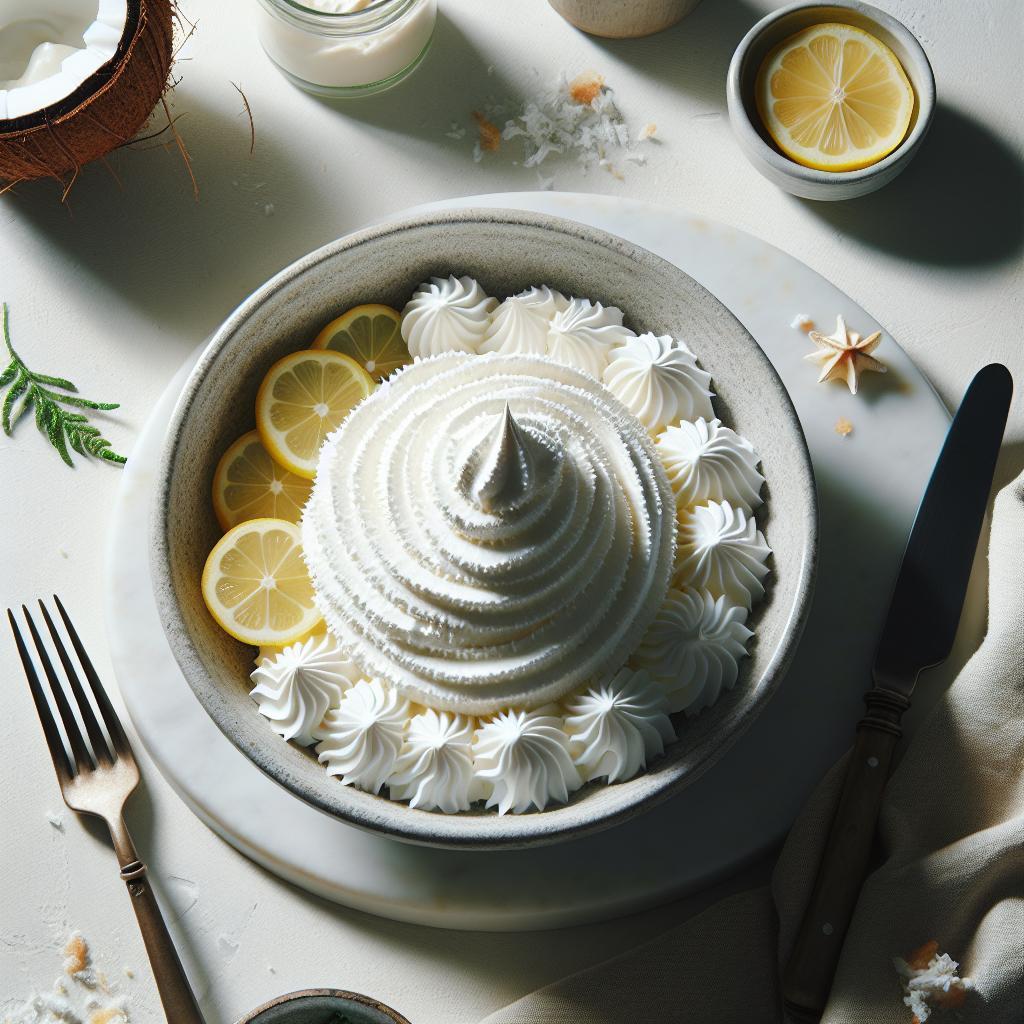
- Whip to Soft Peaks: Using an electric mixer on medium-high speed, whip the cream for 5-7 minutes. Watch as it morphs from dense paste to fluffy, billowy peaks. Don’t overbeat, or it may separate.
- Chill Before Serving: For best results, refrigerate the whipped cream for 15 minutes before using. This helps stabilize the fluffiness and maintains its structure.
Chef’s Notes & Tips for Success
- Choose the Right Coconut Milk: Look for brands containing at least 75% coconut extract and no added stabilizers. The thicker the cream layer, the fluffier your whipped topping.
- Temperature Tricks: Both your coconut milk and whipping tools must be ice-cold. Warm ingredients won’t trap air properly, resulting in a runnier, less stable cream.
- Don’t Shake the Can: Shaking mixes the cream and water layers, preventing the coconut fat from separating properly.
- If Your Cream Won’t Whip: Try refrigerating the cream and tools longer or switch to a different brand of coconut milk. Adding a pinch of cream of tartar can also help stabilize the whip.
- Make-Ahead: Store whipped coconut cream in an airtight container in the fridge for up to 3 days. Rewhip briefly before serving if it deflates.
Serving Suggestions
The airy texture and tropical flavor of whipped coconut cream pair beautifully with a variety of dishes. Spoon it onto vegan chocolate mousse for a luscious finish, dollop on fresh berries for breakfast, or use as a dairy-free replacement on pies and cakes. Garnish with toasted coconut flakes, a sprinkle of cinnamon, or a drizzle of passion fruit syrup to elevate every bite into a sensory celebration.

| Nutrient | Amount Per 2 Tbsp |
|---|---|
| Calories | 70 |
| Protein | 0.5g |
| Carbohydrates | 2g |
| Fat | 7g |
For a deeper dive into coconut milk selection and nutrition, visit The Academy of Nutrition and Dietetics for expert insights.
Q&A
Q: Why isn’t my whipped coconut cream whipping right?
A: Ah, the tropical dream turned whipped cream stream! If your coconut cream is more sad soup than fluffy cloud, it’s usually about temperature, brand, or technique. Make sure your coconut cream is very cold-preferably refrigerated overnight. The fat needs to solidify and separate from the liquid to whip properly. If it’s too warm or fresh from the can without chilling, it won’t fluff up.
Q: Can any coconut cream brand be whipped into cream?
A: Not necessarily! Some coconut cream brands contain stabilizers or lower fat content which can hinder whipping. Look for cans labeled “coconut cream” rather than “coconut milk,” and aim for those with at least 18-22% fat. Organic and full-fat varieties often whip best. Sometimes, it takes a little brand-testing to find your perfect creamy match.
Q: How do I prep the coconut cream for whipping?
A: Preparation is half the magic! Chill the can overnight, then open carefully-don’t shake! Scoop out the thick, solidified cream from the top, leaving the watery liquid behind (save it for smoothies!). Chill your mixing bowl and beaters too; cold tools help fat solids stay firm and whip airy.
Q: What if my whipped coconut cream is still watery or not holding peaks?
A: This can be frustrating! If it won’t thicken, chances are the fat content is too low, or the cream wasn’t cold enough. Alternatively, whipping for too long can break it down and turn it soupy. If in doubt, pop the mixture in the fridge for 10 minutes midway and try again. You can also add a pinch of powdered sugar or a little cornstarch to help with stability.
Q: Can I add anything to enhance the texture or flavor?
A: Absolutely! Vanilla extract or a touch of maple syrup can elevate the taste, while a teaspoon of powdered sugar or a stabilizer like agar powder can improve texture and hold. Just fold in gently after whipping to keep the fluff intact.
Q: Is coconut cream with additives harder to whip?
A: Yes, additives like emulsifiers, stabilizers, or preservatives can prevent the coconut fat from separating properly, making it tricky to whip into stiff peaks. If you struggle with a certain brand, try switching to a purer coconut cream with minimal ingredients.
Q: Any last tips for getting that perfect fluffy coconut whipped cream?
A: Chill everything-cream, bowl, beaters! Use full-fat coconut cream. Patience is key: whip slowly at first, then speed up. And don’t give up-sometimes it just takes a few tries to master the tropical fluff. Your taste buds will thank you!
In Retrospect
Whipped coconut cream can be a dreamy, dairy-free delight when it comes together just right. But when it refuses to fluff up, it’s often a matter of a few simple tweaks-whether it’s the brand of coconut milk, how cold it is, or the whipping technique itself. Next time your cream won’t cooperate, remember that patience, chill, and the right coconut milk can turn that stubborn liquid into a luscious cloud of tropical goodness. With these tips in hand, you’re well on your way to mastering the art of perfect whipped coconut cream-one silky scoop at a time.